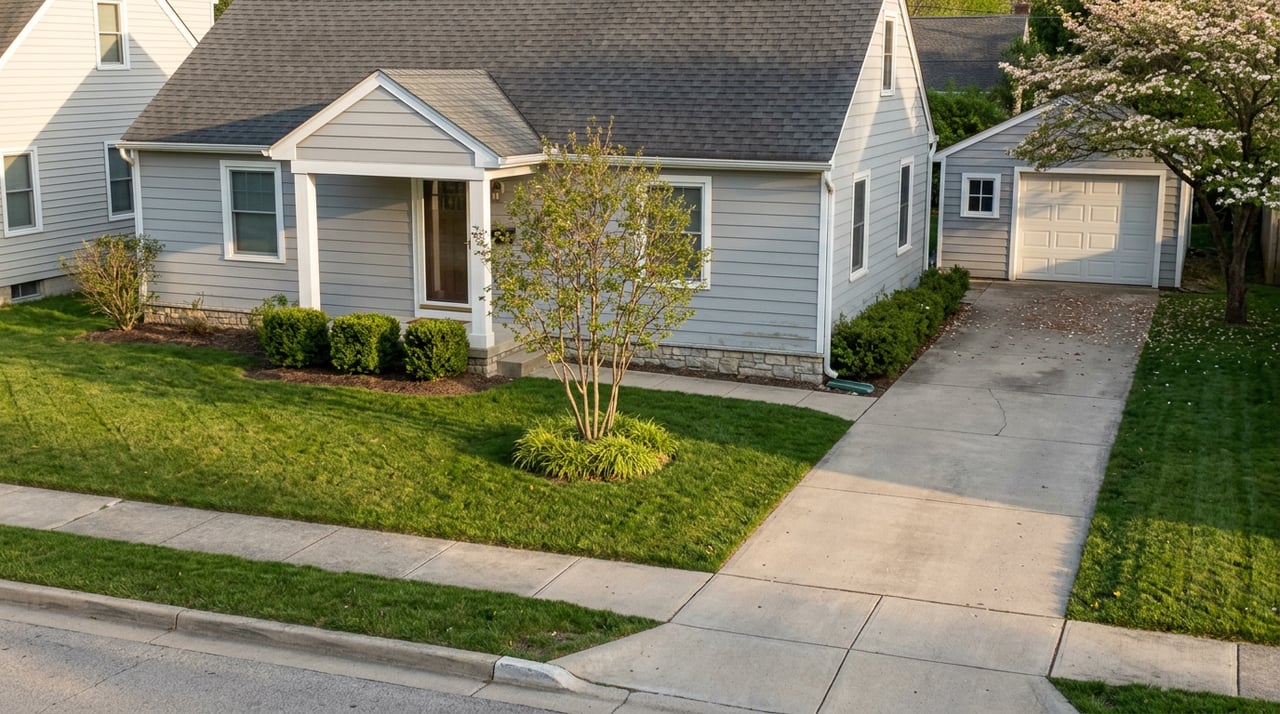
A builder on Staten Island's South Shore did everything by the book. In the months after the city passed its City of Yes zoning overhaul in December 2024, he filed plans for a new home with a basement apartment, got the Department of Buildings to sign off, and broke ground. Then came the call: the project was under audit. The zoning had changed, but the laws that actually let the Department of Buildings issue permits for these units hadn't taken effect yet. He couldn't finish the basement as planned, and he couldn't walk it back without eating the cost of work already done.
That single stalled permit is the whole story in miniature. Staten Island homeowners and buyers have absorbed one headline for nearly two years now: accessory dwelling units are legal. What most of that coverage skips is that "legal" describes two separate regulatory tracks moving at very different speeds, and if you're shopping in Eltingville or Great Kills this fall with a rental unit in mind, which track you're on determines whether you're looking at a project you can start now or one you're waiting on indefinitely.
Two Clocks, Not One
The first track covers brand new accessory units, garage conversions, attic apartments, and detached backyard structures built under the current zoning code. That track opened for real business on September 30, 2025, when the Department of Buildings began accepting applications through its DOB NOW: Build portal. Homeowners can pull a pre-approved plan, hire a registered design professional, and file. That's the track the builder eventually gets to use.
The second track is Local Law 126, the pilot program meant to legalize basement and cellar apartments that already exist and are already occupied, often illegally. This is the unit most homeowners actually picture when they hear "ADU": the finished basement someone's aunt has been renting out for a decade with no certificate of occupancy. As of the Department of Buildings' most recent published guidance, that pilot still isn't taking applications. The rule that would let a homeowner file for an Authorization for Temporary Residence, the document that shields an existing basement tenant from an enforcement action while the owner works toward full compliance over ten years, has not been finalized by the agency. The zoning changed in 2024. The enforcement rules that make the zoning usable for existing units are still being written in 2026.
That gap matters because the two tracks solve different problems. If you're buying a South Shore two-family and want to build a new basement unit from scratch, you can file today, assuming your lot qualifies. If you're buying a house where the basement is already rented out under the table and you're hoping to bring it into compliance quickly, there is currently no application to file. Anyone marketing a Staten Island listing on the promise that "the basement can be legalized" is describing a program that, as of this writing, doesn't exist yet in a form you can apply to. Confirm directly with the Department of Buildings' ADU program page before you factor that income into an offer.
The Best ADU Lots Sit on the Worst Flood Maps
Staten Island has more of the housing stock that qualifies for accessory units than any other borough: detached one- and two-family homes on lots with real yard depth, concentrated on the South Shore in neighborhoods like Great Kills, Eltingville, Annadale, and Tottenville. That's the reason the borough shows up second citywide in ADU permit filings, behind only Queens.
It's also the reason the flood maps matter more here than almost anywhere else in the city. Local Law 127 bars subgrade ADUs, meaning any basement or cellar unit, new or existing, in areas the Department of Environmental Protection classifies as high flood risk: the 2050 Stormwater Flood area, the 2080 100-year coastal flood zone, and the Special Coastal Risk District. Staten Island's South Shore runs along the water. The same beach proximity that makes Great Kills and Tottenville desirable for buyers wanting a yard and a driveway is what puts meaningful portions of those neighborhoods inside the exact flood boundaries that rule out a basement unit entirely, regardless of which of the two regulatory tracks eventually opens up.
This is the part that gets lost when people talk about City of Yes as a blanket win for Staten Island homeowners. The zoning reform was written with this borough's housing stock specifically in mind. The environmental review layered on top of it was written with this borough's coastline specifically in mind. Those two facts pull in opposite directions on the same block.
If you're evaluating a specific address, the flood zone question isn't optional homework. It determines whether a basement conversion is even on the table before you get anywhere near the zoning district, the lot dimensions, or the cost of construction.
What's Actually Getting Built Right Now
Citywide data on ADU filings through the first several months of the program tells a story that doesn't match the basement-apartment narrative either. Attached additions, meaning new construction built onto the side, rear, or top of an existing house, are the leading configuration homeowners are actually filing for, not interior basement conversions. That tracks with what's physically viable on Staten Island: a homeowner in Great Kills or Eltingville with a detached garage and rear yard depth is in a far simpler position than someone trying to retrofit a below-grade space to meet egress, ceiling height, and fire separation standards under Appendix U of the building code.
Not every Staten Island lot qualifies. The zoning applies to R1 through R5 districts, with low-density contextual zones like R1A, R2A, and R3A excluded unless the property sits inside a designated transit zone. Most Staten Island housing falls into R3-1, R3A, R3X, or R4 districts, which puts a meaningful share of the borough's single-family stock in play, but "most of the borough qualifies on paper" and "your specific block qualifies" are different questions worth confirming before you assume an ADU is part of the deal.
The Money Isn't Just Sitting There
Financing has followed the same pattern as the permitting rules: open, then closed, then open again on a narrower window than the headlines suggest. New York State and the city jointly fund the Plus One ADU Program, which offers qualifying homeowners low- or no-interest loans and construction financing grants to build or convert a unit. The program first opened intake in November 2023, closed that survey in February 2024, got reopened and expanded after City of Yes passed, and reopened intake again in March 2026 after roughly two years dormant.
As of the program's own status page, intake closed again on June 12, 2026. Applicants who got in before that date are working through an eligibility review that the agency says will take several months. If you're hearing about this grant now, in September 2026, the honest answer is that the application window isn't currently open, and the city has also warned homeowners about scam outfits charging fees for eligibility reviews the real program provides for free.
None of this means the financing path is dead. It means the grant behaves like a rolling window rather than a standing offer, and any purchase decision built around "I'll get the state grant to cover the ADU build" needs a fallback plan for the months when that window is shut.
What This Means If You're Shopping This Fall
A few things worth confirming before an accessory unit factors into your offer on a Staten Island home:
- Whether the specific lot sits inside a flood risk zone that would bar a subgrade unit, regardless of what the zoning district otherwise allows
- Whether you're trying to build new (the track that's open) or legalize an existing unit (the track that isn't yet)
- Whether the zoning district is R1 through R5 and, if it's a contextual district like R3A, whether the lot falls inside a Greater Transit Zone
- Whether garage or attic conversion is a more realistic near-term path than a basement build, given how the filing data actually looks so far
- Whether grant financing is open at the moment you'd need it, or whether the project pencils out on conventional financing alone
None of this makes an accessory unit a bad idea on the right lot. It means the timeline and the geography both need a second look before rental income shows up in your math. A house in Eltingville with a legal detached garage and dry ground is a very different project than a similar house two blocks closer to the water with a finished but unpermitted basement.
FAQ
If I buy a Staten Island house with an existing rented basement, does City of Yes make that tenant legal automatically? No. The pilot program meant to bring existing basement units into compliance, Local Law 126, is not yet accepting applications as of the most recent Department of Buildings guidance. An occupied but unpermitted unit remains unpermitted until that program opens and the owner completes the compliance process.
Can I still build a brand new basement ADU on the South Shore? Only outside designated flood risk areas. New subgrade units are barred in the 2050 Stormwater Flood area, the 2080 100-year coastal flood zone, and Special Coastal Risk Districts, all of which cover parts of Staten Island's waterfront neighborhoods.
What if my lot isn't in R1 through R5 zoning? Contextual districts like R1A, R2A, and R3A generally exclude ADUs unless the property falls inside a Greater Transit Zone. Confirm your zoning district before assuming a lot qualifies.
Regulatory timelines like this one shift as agencies finish rulemaking, and the right answer for a specific address depends on details a zoning map alone won't show you. If you're weighing a Staten Island purchase with an accessory unit in mind, or trying to figure out what your current home's basement is actually worth once the rules catch up, NMG Properties can walk the lot, the zoning, and the numbers with you before you make an offer. Request a free home valuation and neighborhood market report to start with a clear picture of what a property can and can't support right now.