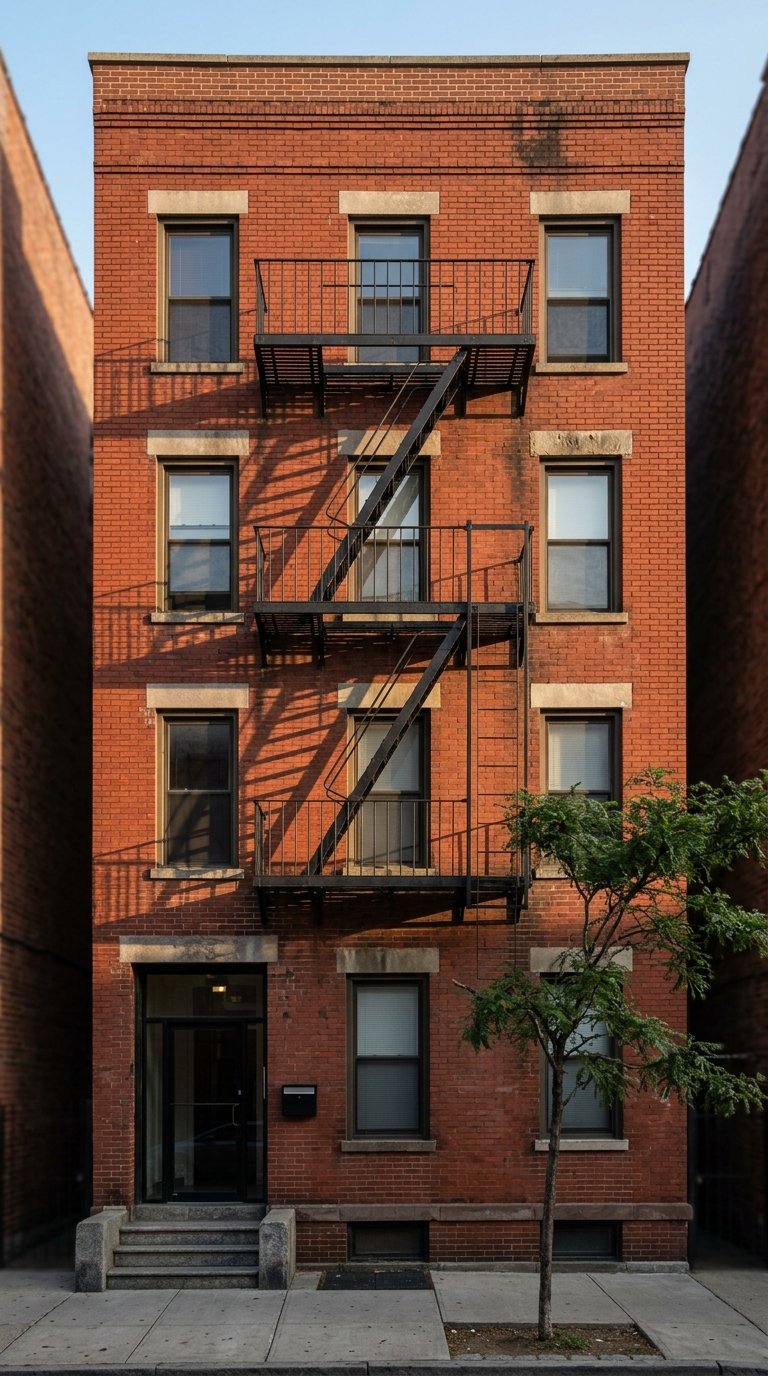
If you have been watching New York City investment property prices and wondering whether the Bronx still offers room to buy below the levels seen in Brooklyn, Queens, or Manhattan, the short answer is yes. But this is not a simple bargain story, and it is not a market where every deal works on paper. If you are thinking about a small multifamily purchase in the Bronx, understanding where the discount comes from can help you avoid expensive assumptions. Let’s dive in.
Bronx pricing still looks discounted
The Bronx still stands out on a price-per-unit basis for 2 to 4 family buildings. According to NYU Furman Center data in 2024 dollars, the Bronx median sales price per unit was $366,380, compared with $525,000 in Brooklyn, $458,270 in Queens, and $1,025,180 in Manhattan.
That price gap is why many investors keep the Bronx on their radar. It offers a lower entry point than several nearby boroughs, which can make the math more workable for buyers focused on cash flow and long-term hold potential.
Why the Bronx discount is real
Lower pricing does not automatically mean a market is mispriced. In the Bronx, the discount appears to reflect a mix of lower rents, tighter regulations, and higher day-to-day operating risk than peer boroughs.
That matters because you should view the Bronx as a risk-adjusted value market rather than a bargain bin. The opportunity is real, but only if you underwrite expenses, compliance, and financing with discipline.
Rent demand remains strong
One reason the Bronx continues to attract investor attention is that the lower pricing is not simply tied to weak occupancy. Furman Center reported a Bronx rental vacancy rate of 2.1%, which was lower than Brooklyn at 2.9% and Queens at 3.1%.
That tells you demand is still present. If you are buying for stable occupancy, the Bronx has data that supports continued renter demand, even while the borough remains more affordable than other parts of the city.
Rent levels are still lower than peer boroughs
Furman Center reported Bronx median gross rent at $1,400 in 2023. That compares with $1,830 in Brooklyn, $1,950 in Queens, and $2,250 in Manhattan.
For investors, that lower rent base is a key part of the equation. You may get a better entry price, but your rent ceiling may also be lower, which means your returns depend heavily on buying the right building at the right basis.
Sales activity shows an active but smaller market
The Bronx investment market has been getting more active. GREA reported $1.82 billion in Bronx commercial investment sales across 269 transactions in 2025, up 46% year over year.
That said, the borough is still a smaller transaction market than Brooklyn, Queens, or Manhattan. A smaller market can mean less competition in some situations, but it can also mean thinner liquidity when it is time to refinance or sell.
Multifamily remains a major part of the market
In the first half of 2025, the Bronx recorded $1.07 billion in investment sales, with multifamily accounting for $565.2 million. GREA and Ariel Property Advisors also reported that rent-stabilized assets represented 76% of Bronx multifamily dollar volume and 74% of multifamily transactions during that period.
This is an important detail if you are shopping for income-producing property. A large regulated housing base shapes pricing, financing, and operating expectations, so you need to know exactly what type of asset you are buying.
Current pricing and cap rates support the value case
For 1H 2025, Bronx multifamily pricing was reported at $111,380 per unit with an 8.25% cap rate. On the surface, that kind of yield profile can look compelling compared with tighter cap rate markets.
Still, higher cap rates often reflect higher perceived risk. In the Bronx, buyers are not just pricing interest rates. They are also pricing regulation, condition, compliance, and cash flow durability.
New supply is changing the rent story
The Bronx remains one of the city’s lower-rent boroughs, but the rental market is becoming more competitive. StreetEasy reported 1,067 Bronx rentals in October 2024, up 10.2% year over year, with a median asking rent of $2,900.
Inventory growth is not automatically bad news, but it does mean renters have more choices. If you are buying or repositioning a property, you need to compare your building against what is newly available nearby.
Concessions are a real factor
StreetEasy later reported that the Bronx had the highest share of rentals offering concessions in New York City in October 2025, at 43.2%. That suggests many landlords are using incentives to compete for tenants.
For investors, this can affect your true effective rent. A pro forma based only on headline asking rent may overstate income if nearby properties are offering free rent or other concessions.
New construction is adding pressure
StreetEasy also noted that one in five new Bronx rentals in 2025 was new construction, the highest share in the city. That means newer buildings are becoming a more visible part of the competitive landscape.
This does not erase the Bronx value case. It does mean that in some corridors, rent growth may be shaped by amenities, concessions, and the pace of new deliveries rather than by a simple shortage story.
Development trends create long-term upside
The Bronx has seen significant housing production in recent years. NYC Planning reported 9,842 new-building completions in the borough in 2023, which was the highest of any borough and represented 35% of citywide completions.
For investors, that level of activity signals confidence in the borough’s long-term housing demand. It also means you should pay close attention to which submarkets are gaining new housing, infrastructure, and job access.
Transit-linked areas may matter most
The Bronx Metro-North Station Area Plan was approved in August 2024 and is expected to create about 7,000 homes and 10,000 permanent jobs around four new stations planned for 2027. City of Yes for Housing Opportunity was also approved in 2024 to create over 80,000 new homes citywide.
These kinds of public actions can support long-term demand in transit-accessible areas. For investors looking at small multifamily or mixed-use property, location within improving corridors may matter as much as the initial purchase price.
North Bronx planning could shape future opportunity
In May 2026, the city announced a North Bronx neighborhood planning effort focused on White Plains Road and other transit-accessible corridors that have seen limited new housing development. Planning efforts like this can influence where future investment and redevelopment attention goes.
That does not guarantee appreciation. It does suggest that some Bronx submarkets may benefit more than others from future public and private investment.
Risks are what justify the discount
The Bronx price gap exists for a reason. Furman Center reported 309.4 serious housing code violations per 1,000 privately owned rental units in 2023, far above Brooklyn, Queens, and Manhattan.
If you are evaluating a building, this is a reminder to focus hard on physical condition and deferred maintenance. A lower purchase price can quickly lose its appeal if repair costs and compliance issues are larger than expected.
Foreclosure and distress still matter
The Bronx also recorded 724 residential foreclosure filings in 2022, along with 8.5 foreclosure actions per 1,000 one-to-four family and condo properties. That is another sign that operating stress is part of the local market story.
Some buyers see that as opportunity. Others see it as a sign to underwrite with extra caution, especially when projecting reserves, debt service, and future capital needs.
Regulation shapes buyer behavior
Brokerage commentary in 2025 noted that buyers in the Bronx were underwriting regulation risk even more heavily than interest rates. They were focused on durable cash flow rather than speculative appreciation.
That is a practical mindset for this market. If your investment plan depends on aggressive rent growth or minimal repair spending, the Bronx may feel less undervalued once real operating conditions come into focus.
What investors should look for now
If you are asking whether the Bronx is still undervalued, the best answer is that it can be, selectively. The strongest opportunities appear to be in well-located small multifamily and mixed-use assets, especially in transit-linked corridors and areas benefiting from public investment or zoning changes.
At the same time, this is a market where details matter. Building condition, rent roll quality, regulatory exposure, concessions in nearby inventory, and neighborhood-level supply trends can all change whether a deal truly makes sense.
The practical takeaway
The Bronx still offers a lower entry point than Brooklyn, Queens, and Manhattan for many small multifamily investors. Vacancy data suggests the borough is not simply cheap because demand is weak, and current cap rates and transaction activity support the case that buyers still see value here.
But the borough is not broadly undervalued in a way that makes every property attractive. It is better understood as a market where careful buyers may find stronger cash-flow potential, provided they stay conservative on rents, expenses, compliance, and future competition.
If you want help evaluating Bronx multifamily opportunities with a practical, neighborhood-level lens, NMG Properties Inc can help you assess pricing, positioning, and next steps.
FAQs
Is the Bronx still cheaper than Brooklyn for multifamily investors?
- Yes. Furman Center data shows the Bronx median sales price per unit for 2 to 4 family buildings was lower than Brooklyn in 2024 dollars.
Is Bronx rental demand weak because prices are lower?
- No. Bronx rental vacancy was reported at 2.1%, lower than both Brooklyn and Queens, which suggests the lower pricing is not simply tied to weak demand.
Are Bronx multifamily cap rates higher than other NYC markets?
- Bronx multifamily assets were reported at an 8.25% cap rate in 1H 2025, which supports the value case but also reflects higher perceived risk.
Does new construction affect Bronx investment properties?
- Yes. New construction has become a larger part of the rental market, and concessions are common, which can shape achievable rents in some areas.
What is the biggest risk when buying in the Bronx?
- The research points to operating and compliance risk, including higher housing code violations, foreclosure stress, and the impact of regulation on underwriting.
What type of Bronx investment property may offer the best opportunity?
- The research suggests well-located small multifamily and mixed-use properties in transit-linked corridors may offer the most attractive risk-adjusted opportunity.