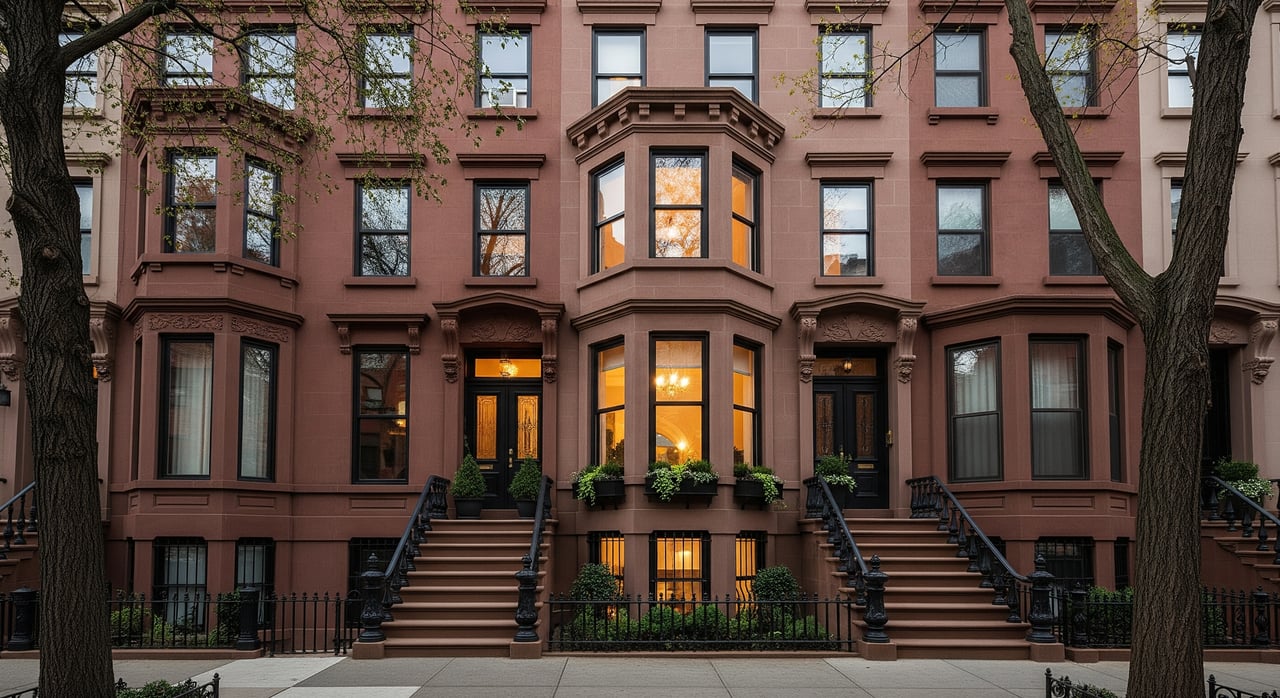
Curious how investors in Brooklyn are qualifying for mortgages without handing over stacks of W‑2s and tax returns? If you are building a small portfolio or targeting a 1–4 family or condo, DSCR loans might be the tool that unlocks your next deal. In this guide, you will learn how DSCR underwriting works, where lenders set the bar in Kings County, and how to plan your timeline so you can close smoothly in the next 6 to 12 months. Let’s dive in.
DSCR basics in Brooklyn
Debt service coverage ratio, or DSCR, tells a lender if the property’s income can cover the mortgage. The formula is simple: DSCR = Net Operating Income ÷ Annual Debt Service. Lenders use DSCR programs to focus on property cash flow rather than your personal employment income.
These loans are common for small portfolio buyers purchasing 1–4 family properties, townhomes, brownstones, or condos. You will see them offered by portfolio banks, regional lenders, and private or non‑QM lenders that design programs around investor cash flow.
How lenders calculate DSCR
What counts as income
Lenders underwrite rental income using a few common methods. An appraisal often includes a market rent schedule, which the lender may rely on. If leases or a rent roll exist, those can support actual trailing income. In some cases, third‑party rent surveys or broker rent comps are used when leases are not available.
Allowances and expenses
Most programs apply vacancy and expense allowances to gross rent to arrive at NOI. A combined allowance in the range of about 30 to 50 percent of gross rent is common, with the exact figure varying by lender, property type, and market assumptions.
A quick example
If a property’s projected NOI is $36,000 per year and the annual debt service is $30,000 per year, DSCR equals 36,000 ÷ 30,000, which is 1.2. A lender with a 1.2 minimum would consider that acceptable. A lender that requires 1.25 would not.
Typical DSCR loan terms
DSCR thresholds
- Many programs set minimums between 1.0 and 1.25.
- Conservative programs often require 1.2 to 1.25. More flexible non‑QM programs may accept about 1.0 if you have strong reserves or credit.
LTV and down payment
- Expect roughly 65 to 75 percent loan‑to‑value for small multi‑family or SFR investor products.
- Some lenders may go to 75 to 80 percent on certain condos or very strong properties.
- Higher LTV usually comes with higher rates and tighter DSCR or reserve requirements.
Rates, structure, and amortization
- Pricing is typically higher than conforming, owner‑occupant fixed rates.
- Interest‑only options are common for 5 to 10 years, which lowers near‑term debt service and can improve DSCR.
- Terms range from 5 to 30 years, including 30‑year amortization or shorter fully amortizing options.
Reserves and credit
- Many lenders require post‑close reserves measured in months of payments, often 6 to 12 months, and sometimes more for multi‑unit properties.
- Programs typically expect acceptable credit tiers. Some private programs allow lower scores with stronger property metrics and higher pricing.
DSCR vs conventional financing
Key advantages
- Qualify on property income instead of your personal W‑2s and tax returns.
- Use market rent from an appraisal when leases are missing or rolling.
- Interest‑only periods can improve short‑term cash flow and scaling.
- Helpful for repeat acquisitions when full personal documentation would slow you down.
Tradeoffs to weigh
- Interest rates and fees are usually higher than the best conforming rates.
- Property eligibility can be tighter in NYC, especially for co‑ops and some condos.
- Appraisals and rent comps matter more in neighborhoods with scarce data or regulated units.
- Non‑QM loans can carry more complex terms, so understand prepayment and default provisions before you sign.
Property types and NYC constraints
DSCR lenders commonly finance 1–4 family properties and condos. Some also consider small mixed‑use. Co‑ops are often excluded or limited to specific local banks. When co‑ops are permitted, underwriting is more restrictive and the timeline is longer due to board approval.
Condo eligibility depends on association health. Lenders look for adequate reserves, acceptable owner‑occupancy ratios, and no major litigation. Buildings with investor caps or pending litigation can be challenging.
In Brooklyn, verify that each unit is legal and the certificate of occupancy aligns with the actual unit count. Newly converted or unpermitted units create hurdles. If units are rent stabilized or otherwise regulated, lenders typically discount or cap income based on lawful rents, not theoretical market rent.
Brooklyn timing and closing realities
Expect 45 to 90 days from accepted offer to closing depending on the asset and financing. For financed 1–4 family or condo deals, 60 to 75 days is a realistic planning range.
DSCR loans can add time if the lender needs an income‑approach appraisal or specialized rent analysis. Non‑QM lenders may also have longer turn times than high‑volume conforming lenders.
Common delays include Department of Buildings violations, unclear unit legality, condo or co‑op paperwork, title issues on older brownstones, and insurance underwriting on older or mixed‑use structures.
Closing costs and cash planning
Brooklyn closings often carry higher miscellaneous costs than many markets. Budget for buyer attorney fees, title insurance and searches, recording charges, possible transfer taxes, and any condo or co‑op application and move‑in fees.
Plan for post‑close reserves as required by your lender, plus initial capital for maintenance, compliance work, and unit turns. Strong reserve planning supports both underwriting and early ownership stability.
A 6–12 month game plan
3–6 months before you buy
- Get prequalified with one or two DSCR lenders. Compare DSCR floors, LTV limits, interest‑only options, and reserve requirements.
- Run DOB and HPD checks, confirm the certificate of occupancy, and identify any open permits or violations.
- Verify rent regulation status. Regulated units will reduce underwritten income and DSCR.
- Assemble bank and asset statements, entity documents if buying in an LLC, tax IDs, and any existing leases or rent rolls.
Offer to close
- Allow 7 to 21 days from offer acceptance to contract signing with a negotiated due diligence period.
- Plan 2 to 4 or more weeks for appraisal and loan processing depending on complexity and lender capacity.
- For condos or co‑ops, start association or board paperwork immediately after contract to avoid delays.
- Expect 30 to 75 days from contract to closing, longer if repairs or approvals are required.
Documents lenders often request
- Property: leases, rent roll, recent rent payments, condo documents if applicable.
- Appraisal help: access for the appraiser, unit condition notes, and comparable rent insights.
- Borrower: credit consent, bank statements, proof of reserves, LLC or partnership paperwork.
- Building/legal: certificate of occupancy, survey or plans if requested, violation history and remediation plan.
Common pitfalls to avoid
- Assuming market rent when units are regulated. Always verify lawful rent and registration status.
- Ignoring unit legality. Unpermitted conversions create valuation and lending obstacles.
- Underestimating expenses. Use a conservative vacancy and expense allowance when modeling NOI.
- Waiting to start condo or co‑op paperwork. Association timelines can push closings.
- Skipping lender prequalification. DSCR criteria vary and affect your allowable loan amount.
Is a DSCR loan the right fit
Choose DSCR if your focus is scaling a Brooklyn portfolio and qualifying on property cash flow. It can be a smart match for self‑employed investors or those using LLC structures. If your goal is the lowest possible rate and you can document full personal income, compare conventional options as well.
If you want help sourcing deals that meet lender metrics and neighborhood realities, a local brokerage with multi‑family expertise can shorten your learning curve.
Next steps
Ready to map a buy box that matches DSCR criteria and Brooklyn timelines? Connect with the neighborhood‑focused team at NMG Properties Inc for buyer representation, multi‑family sourcing, and pragmatic guidance through due diligence and closing.
FAQs
Can I use a DSCR loan to buy a Brooklyn condo and rent it out right away
- Yes, if the lender allows condos and the association meets criteria such as adequate reserves, acceptable owner occupancy, and no major litigation. Investor caps can apply and documentation will be reviewed.
Will a DSCR lender count a new lease I sign after contract
- Many lenders prefer existing leases or market rent from the appraisal. Some accept executed leases that meet their verification rules, but timing matters, so discuss this with the lender early.
Do DSCR lenders finance Brooklyn co‑ops
- Fewer DSCR or non‑QM lenders finance co‑ops due to board approvals and the security structure. Local banks with co‑op experience are more likely to consider them with stricter terms and longer timelines.
Do DSCR loans for 1–4 family rentals require personal guarantees
- Most small residential DSCR loans are recourse and require a personal guaranty or borrower‑level signature. Program specifics vary, so review terms with your lender.
What DSCR and LTV do lenders commonly require in Kings County
- Many programs target DSCR minimums between 1.0 and 1.25, with loan‑to‑value around 65 to 75 percent for investor products. Higher LTV often requires stronger reserves and carries higher pricing.
How should I estimate operating expenses for DSCR underwriting in Brooklyn
- Use a conservative model that includes taxes, insurance, management, maintenance, owner‑paid utilities, and a vacancy allowance. Lenders often apply a standardized 30 to 50 percent expense load if detailed historicals are not provided.