Looking for stronger cash flow than you’re seeing downstate? Many NYC and Long Island investors are eyeing Rensselaer County for duplex opportunities at more accessible prices. You want steady rent demand, clear numbers, and a simple path from offer to closing. In this guide, you’ll learn local property types, the key formulas that drive returns, financing and New York rules to know, and a due diligence checklist you can use right away. Let’s dive in.
Why Rensselaer County
Rensselaer sits across the Hudson River from Albany and is part of the Capital Region. Government and education employers in the Albany metro support consistent rental demand. The Rensselaer train station and area transit options make commuting practical, which helps stabilize occupancy compared with rural markets.
Common duplex types
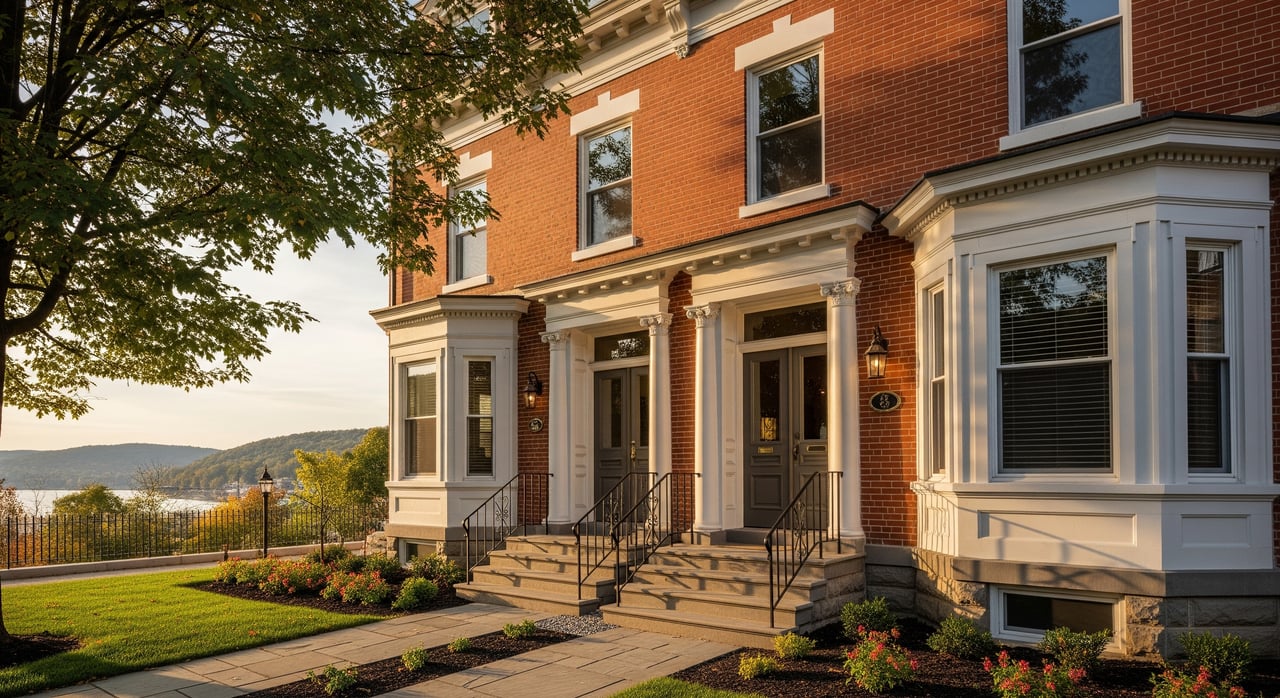
You will see many older wood-frame and brick two-family homes from the late 19th and early 20th centuries. Some began as single-family houses and were converted into stacked or side-by-side duplexes. Small brick rowhouses appear in tighter blocks, and you may also find limited mixed-use buildings with a street-level commercial space and one or two units above.
Neighborhood nuance
Areas near downtown Rensselaer, transit, and Albany views often attract renters and can support higher rent levels. Outlying neighborhoods and small towns in the county trade at lower prices and typically deliver lower rents. Condition varies widely, so budget for mechanical and exterior work, especially in older stock.
Run the numbers
You will make better decisions when you use consistent metrics. Here are the core terms and formulas investors rely on:
- Gross Scheduled Income (GSI): total annual rent if fully occupied, plus recurring income like parking or laundry.
- Effective Gross Income (EGI): GSI minus vacancy and collection loss, plus other income.
- Net Operating Income (NOI): EGI minus operating expenses like taxes, insurance, repairs, owner-paid utilities, management, and supplies. Excludes mortgage, income taxes, and depreciation.
- Cap rate: NOI divided by purchase price. Compares income return across properties.
- GRM: purchase price divided by GSI. A quick screen that ignores expenses.
- Cash-on-Cash Return: pre-tax cash flow after debt service divided by total cash invested.
- DSCR: NOI divided by annual debt service. Many lenders want DSCR above 1.2 on investment property.
From rent roll to cap rate
Use this simple process:
- Confirm current rents with signed leases and payment history. Separate actual lease rates from aspirational market rent.
- Add all monthly rents and multiply by 12 to build GSI. Include any other contract income.
- Subtract a vacancy and collection allowance. A 5 to 10 percent starting point is common for small multifamily. Adjust if you have better local data.
- Add any non-rent income to get EGI.
- Itemize operating expenses: taxes, insurance, owner-paid utilities, repairs and maintenance, management, supplies. Subtract from EGI to get NOI.
- Divide NOI by the purchase price to find the cap rate. Divide price by GSI for GRM. Compare to recent sold comps in the same neighborhood.
A plug-in example
Use this template and replace the numbers with the actual property data you collect:
- Example GSI: 36,000 per year. Vacancy at 7 percent yields EGI of 33,480.
- Example expenses: taxes 6,000, insurance 1,200, utilities 1,800, maintenance 3,000, management 2,500. Total 14,500.
- Example NOI: 33,480 minus 14,500 equals 18,980.
- Cap rate at 300,000 price: 18,980 divided by 300,000 equals 6.33 percent.
- GRM: 300,000 divided by 36,000 equals 8.33.
These are placeholders. Always verify seller statements with documents and adjust assumptions for the specific building and location.
What to budget
Older Capital Region buildings can have higher ongoing and cyclical costs. Plan ahead for the following:
- Property taxes: one of the largest line items in New York. Pull recent bills and assessment history.
- Insurance: budget for landlord coverage, not homeowner. Consider flood risk near the river or streams.
- Utilities: confirm who pays water or sewer, heat, and common-area electric. Check if units are separately metered.
- Repairs and maintenance: many owners set 5 to 10 percent of gross rents, but older systems may require more.
- Management: if hiring, expect roughly 8 to 12 percent of collected rents for small portfolios.
- Capital expenditures reserve: set aside funds for big-ticket items like roofs, boilers, and windows. A common range is 250 to 1,000 plus per unit per year based on condition.
- Vacancy and collection: start with 5 to 10 percent until you have local performance history.
Financing in New York
Owner-occupied vs investor loans
FHA programs allow you to buy 1 to 4 units with a low down payment when you live in one unit. The property must meet minimum standards and the appraisal must support value. Conventional loans for 2 to 4 units have different down payment and reserve rules than single-family. Many small duplex investors also use local community banks or credit unions that portfolio their loans and know the Capital Region well.
What lenders will ask
Expect questions about DSCR, reserves, maximum loan-to-value, and how the appraisal will be completed. A DSCR above 1.2 is a common minimum for investment loans. Ask your lender whether they will treat the purchase as residential 1 to 4 units or under stricter investor terms, and whether they will underwrite using the income approach.
New York rules to know
Statewide landlord-tenant updates
Rensselaer County is generally outside the New York City rent stabilization framework, but statewide rules still apply. The Housing Stability and Tenant Protection Act of 2019 changed eviction processes, security deposit handling, and lease practices across the state. Make sure your leases and procedures align with current guidance.
Local registrations and safety
Confirm with the City of Rensselaer building department whether rental registration, a certificate of occupancy, or other permits are required for multi-family units. For buildings constructed before 1978, federal lead paint rules apply and New York has additional disclosure and remediation obligations. Smoke and carbon monoxide detectors are required, and tenants have rights to habitable conditions.
Taxes and planning basics
Residential rental property is generally depreciated over 27.5 years for federal tax purposes. Property tax assessments should be reviewed annually, since taxes often drive returns. Programs for primary residences, such as STAR, do not apply to investment property. If you plan to sell and buy another property, you may evaluate a like-kind exchange under IRS rules. Speak with a tax advisor about your situation.
Due diligence checklist
Request these items early, ideally before or with your offer:
- Current rent roll with start and end dates, rent amounts, and security deposits.
- Copies of signed leases and 12 months of payment history or a ledger.
- Seller profit and loss statements for the past 12 to 36 months and year to date.
- Recent utility bills for water or sewer, gas, and electric, plus meter details.
- Property tax bills for the past 2 to 3 years and assessment history.
- Certificate of occupancy and any rental registrations, permits, or code records.
- Any recent inspection reports, appraisals, or engineering reports.
- Lead-based paint disclosures for pre-1978 buildings, and smoke or CO confirmations.
- Capital items list and service logs: roof, boiler, electrical, windows.
- Tenant estoppel letters and copies of any management or vendor contracts.
Red flags to spot
- Occupied units without signed leases.
- Long-term tenants at far below market rent with uncertain renewal terms.
- Security deposits not handled or documented under New York rules.
- High historical turnover or extended vacancies.
- Deferred maintenance or large unreported capital repairs.
How to ask for comps
Use specific, repeatable requests so your analysis is consistent:
- “Please provide recent sold and active comps of 2 to 3 family properties within the same neighborhood from the past 6 to 12 months. Include address, sale date, sale price, unit count, build year, gross rents at sale if available, NOI or cap rate if recorded, and photos.”
- “Provide current rental listings for similar 2-bedroom and 1-bedroom units in the same block or zip to establish market rent.”
- “From the seller, please send the last 12 months’ rent roll, signed leases, tenant payment histories, the past 2 to 3 years of P&L, the last two years of tax bills, and any inspection or code violation records.”
Ask your broker to calculate GRM, cap rate, price per unit, price per square foot, days on market, and whether the comps were cash or financed. Occupancy and tenant turnover at sale can also help you adjust assumptions.
Capital Region vs NYC or Long Island
Purchase price and yields
Downstate properties often carry higher prices per unit and lower cap rates. The Capital Region typically offers lower entry prices and, in many cases, higher target cap rates for small multifamily. Returns still depend on your actual rents, expenses, and the building’s condition.
Liquidity and operations
NYC and Long Island markets are deeper and more liquid, but competition and regulatory complexity can be intense. Sales in the Capital Region can take longer, yet your basis may be lower. Many buildings in Rensselaer are older, so plan for more CapEx relative to purchase price than some newer suburban stock.
How to compare fairly
- Compare cap rate and cash-on-cash after debt service using the same financing assumptions for each property.
- Adjust for turnover, vacancy, and maintenance. Small changes in older buildings can swing returns.
- Consider management logistics: your distance from the property, local contractor availability, and your ability to visit regularly.
Next steps
- Clarify your objective: live in one unit or operate as a pure investor. Financing and returns will change based on this choice.
- Build your underwriting template with GSI, EGI, NOI, cap rate, GRM, cash-on-cash, and DSCR.
- Line up financing with a lender that knows 2 to 4 unit properties in New York. Ask about DSCR, reserves, down payment, and appraisal methods.
- Request the full document set from the seller and start verifying numbers against statements and bills.
- Price your offer using recent 2 to 3 family comps in the same neighborhood, adjusted for condition and income.
- Schedule inspections and plan CapEx. Confirm local rental registration, safety items, and code status.
If you want a second set of eyes on a duplex in Rensselaer County, connect with the team at NMG Properties Inc. We can help you source, underwrite, and negotiate small multifamily deals with a clear, data-informed plan.
FAQs
What makes Rensselaer rentals steady?
- The city’s position across from Albany, combined with regional government and education employers and transit access, supports consistent rental demand compared with more rural markets.
What duplex types are common in Rensselaer?
- Older wood-frame or brick two-families, conversions from single-family to duplex, small rowhouses, and some mixed-use with an apartment or two above street-level retail.
How do I estimate cap rate on a duplex?
- Verify rents with leases and payment history, model a 5 to 10 percent vacancy allowance, subtract verified operating expenses from EGI to get NOI, then divide NOI by the purchase price.
What DSCR do lenders usually want?
- For small investment property, many lenders look for a DSCR above 1.2. Exact thresholds depend on the lender and loan product.
Are Rensselaer properties rent stabilized?
- Most of Rensselaer County is outside NYC rent stabilization, but statewide rules such as the 2019 tenant protection act apply. Confirm any local ordinances and registration requirements.
What documents should I request before offering?
- Ask for the rent roll, leases, 12 months of payment history, 2 to 3 years of P&L, recent utility bills, tax bills and assessment, certificate of occupancy or rental registration, code records, and any inspection or engineering reports.